Showing posts with label careers. Show all posts

25 April 2019

Libraries, leadership, and overvaluing expertise

I am not usually a big reader of the business self-help books that pop up in airport bookshops. However, I took notice when a colleague recommended How Women Rise, because I respect her and trust her judgement and because her career path is one that represents a possible direction for my own. I've now borrowed this from my public library service twice and recommended it myself to some co-workers, so I thought it would be good to blog some reflections. 
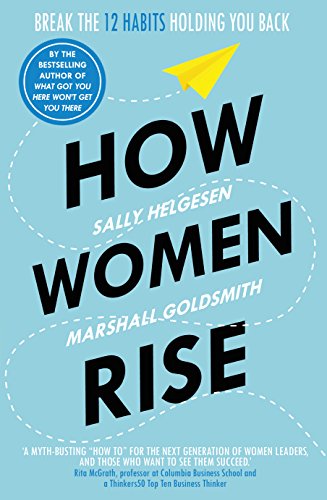

Cover of How Women Rise by Sally Helgesen and Marshall Goldsmith
I'm not going to review the book as a whole or go through the whole list of self-limiting behaviours that the authors observe through their executive coaching practices as being more prevalent amongst women. It's useful to point out up front that Helgeson and Goldsmith are aware of the many structural barriers to women achieving their full potential in the mostly-corporate environments from which they draw the book's case studies. However, they see themselves addressing a different set of challenges, which they argue are more within women's immediate control. If you can take this approach at face value you will probably find yourself able to get something useful out of this book. For a more #critlib view you will probably want to bypass their sidestepping of these structural issues and read something else entirely!

The one habit (#3) that jumped out at me from my own career and observing others in libraries is overvaluing expertise:
Trying to master every detail of your job in order to become an expert is a great strategy for keeping the job you have.... you put enormous effort into learning every aspect of your job and assuring your work is letter-perfect. This feels proactive, but it can set you up to remain on an endless treadmill, constantly setting a higher bar for yourself as you seek to always go the extra mile.... 
Of course, we're not advocating sloppy performance. And we know that skill and knowledge are required for success. But if you want to rise in your field or your organization, expertise will only take you so far. That's because the top jobs always require managing and leading people who have expertise, not providing expertise yourself. (86)
The authors discuss the difference between intrinsic and extrinsic rewards, and the way that mastery of a work area provides both the satisfaction of knowing you are doing something really well (intrinsic) and a pathway to having your contributions recognised by others (extrinsic). This is good up to a point, but can become a problem for women who want to move into leadership positions for three reasons:
  • Learning every aspect of your job to the highest level uses up mental bandwidth that could be shared across other equally important areas
  • Doing your current job to perfection only demonstrates that you're great at the job you're in now, not the jobs that you may want to move to in future
  • Your expertise makes you indispensable to your boss, who may then have an interest in keeping you where you are. 
Meanwhile, the authors argue, male colleagues are likely to be focused on doing their jobs well enough, while still leaving time to build the relationships and organisational / industry visibility that will help them progress their careers. 

The authors also describe four types of power that we can have within organisations. Expertise is only one of these, the others being connections/relationships, personal authority, and positional power (i.e. where we stand in the organisational hierarchy). These are complementary and ideally would be in balance because "cultivating expertise at the expense of other kinds of power will not position you as a leader" (93). 

(I might digress slightly to say that the word power is a bit fraught for me. I think it has some poor connotations for lots of people, probably because we have all at some point in our careers been on the receiving end of someone else wielding power - probably positional power - over us in a negative way. The authors' definition of power in this book is a bit different. They describe it as "influence potential" and argue that "if you want to influence the world in a positive way... you have to have power" (95). It is hard to summarise this, but I think they see power as the ability to articulate your goals - both for your organisation and yourself - and work purposefully towards them, which is definitely a bit more palatable a concept.)

So, how does the overvaluing of expertise play out in libraries? I have seen this in my own career and in various positions and workplaces in a range of ways, including:
  • Reinforcement of rigid distinctions between 'professional' and 'para-professional' roles, and between different types of professional roles (e.g. front-of-house vs back-of-house)
  • Suspicion of team leaders and managers who have not 'risen through the ranks' by developing a deeper and deeper technical understanding of the area they are responsible for
  • Locating specialist expertise in one role that is essential for the organisation strategically but a dead-end in terms of career progression for the person in it - this is particularly obvious in emerging areas (research data management, I am looking at you) but also seems to apply to other types of roles (e.g. see this blog post about e-resources management)
  • Length of service as a proxy measure for ability - a sense of entitlement to higher positions by virtue of having the most years of experience
  • Pressure on students and early career librarians to specialise in a sub-discipline (cataloguing & acquisitions, liaison, public programming) and/or commit to a sector (schools, public, academic, special)
  • Negative attitudes towards those who 'jump around' (including envy of the career progression that can result for those prepared to take the very real risks associated with these leaps)
  • In recruitment and development, weighting library experience over generic transferable skills such as customer service, communication, teamwork, advocacy, IT skills, and problem solving, even when the generic skills are more important to being successful in the position
  • Lack of awareness that many skills needed for management positions cannot be easily gained alongside mastery of a work area or function, unless specific attention is paid to them as development goals (e.g. recruitment, health and safety, financial management, vendor management)
  • Consolidation and validation of expertise-based silos / team structures at the expense of cross-disciplinary groupings. 
I don't have any firm thoughts right now on what this means for us at a sector or organisational level, but it's definitely made me think about my own views on expertise (my own, as well as that of others). By highlighting this as a potential issue to be aware of, this book has definitely helped me make sense of some challenges I have had transitioning into a more senior role and given me some food for thought about how I can ensure I don't close down opportunities for myself and others in future. 

Further reading

Helgesen, Sally, and Marshall Goldsmith. 2018. How Women Rise: Break the 12 Habits Holding You Back. Penguin Random House.


26 January 2018

What I learned in 2017 (confessions of an ambivalent manager)

NewCardigan's GLAM Blog Club is out of the blocks for another year, providing helpful monthly writing prompts for for people who work in galleries, libraries, archives and museums. Recognising that the transition from one year to the next is often a time for reflection, this month's theme is the same as last January's: What I want to learn in the year ahead / What I learned in the past year. 

If 2016 was the year that I began to more fully embrace my role as a hybrid library/IT professional, 2017 was the year I lost my ambivalence about becoming a manager.


I transitioned into my first management role in late 2014. This happened after many years of telling myself that this was not the pathway for me. I was so convinced of this that I spent a year in a mentoring program ten years ago identifying career pathways that would help me avoid management roles without completely stalling my career progression or meaning that I couldn't have a leadership role of some kind.

In 2014 I saw a job ad that changed my mind for three reasons. Firstly, it was working for someone that I admired, who I knew would be a good role model, mentor and source of support. Secondly, I had been in the organisation for long enough to know it had good frameworks in place for developing staff who were moving into supervision and management. Thirdly, I was starting to realise that as lots of library profession leaders were transitioning to retirement, someone would need to take their place. Could that be me at some point in future? I felt scared to step up and take on a lot more responsibility than I had ever had before. But if I asked myself the question If not now, then when? the honest answer was There won't be a better time, you idiot! so I decided (with encouragement from my partner, friends and some colleagues) to go for it.

2017 was my third year in that management role, which recently expanded to cover both library systems and research repositories. Last year a lot of things finally starting 'gelling' for me. My learning has not just been about management in an objective sense i.e. what tasks are involved, and what is expected of someone at that level. I've also had to consider what management means (or could mean) to me. My ideas of what a management role involved were very limited prior to actually having one; I now know my existing knowledge and skills were more transferable than I thought. I also understand much better how some of my strengths can be expressed in a management role and how I might address some of my weaknesses over time.

Here are some thoughts on this process that might help you feel better about taking this plunge at some point.

Managers manage lots of things, not just people


I though most of my job would be about supervising people but actually a not-exhaustive list of the things that I manage includes staff, business processes, systems, time (my own and that of others), corporate information, risk and compliance, budget, procurement, contracts and vendor relationships, recruitment, projects, policies/procedures, a workspace, and health and safety.

Yes, managing people is a large and important part of this, but it is definitely not everything that I do.

You can't be good at everything, and that's OK


If you are managing lots of things (see above), it makes sense that you will be better at some things than others, right?

Of the list above, I'd self-assess as really competent at some, including a few things that other people probably find difficult or very very tedious. If you need to run a tender process or to review and negotiate a systems contract, I'm your go-to gal. I can spin up a position description and run a recruitment exercise for a new job, no worries at all. Spotting a copyright / privacy / reputational risk at a thousand paces or working well with pernickety folk responsible for compliance with IT architecture and governance are also things I know I can do. 

But then there are other things I still find difficult and will likely spend the next twenty years trying to incrementally improve. Finance-related tasks that do my head in seem to be a breeze for others. Managing staff remains a work-in-progress; as an introvert with a preference for logic and systems I find it really challenging to lead a group of human beings who all bring their own backgrounds, thought processes, motivations, emotions, interests and relationships to the workplace. On bad days I feel like I will never even really understand other people I work with, let alone be able to motivate or inspire anyone.

What I have learned is this: I don't need to be great at everything. Not only that, from three years of observing management-level peers and superiors, I now know that not only am I not good at everything, neither is anyone else! Everyone is just trying to do their best and everyone has their blind spots.

It's not even possible that any one individual could flawlessly handle everything a management role in a messy, ambiguous, ever-changing 21st century organisation might throw up. Three years in, I know that there are plenty of ways in which I am a good manager. I also know that the best way to deal with the things I'm less good at is to acknowledge them and ask for help. In my experience this will be freely given because our profession is full of lovely people who want to help other people succeed.

A big part of management is managing yourself


This recent Huffington Post blog article provides a neat introduction to what this might mean in the workplace. It describes self-management as demonstrating "self-control and an ability to manage time, priorities and decision-making capacity."

For me this has meant coming to grips with a number of things. Here are just some.

I'm being watched (and judged) all the time
This is an uncomfortable truth for those of us at the introvert end of the spectrum. Being a manager (or a leader of any kind, really) means you are a role model, whether you like it or not. People are taking notice of the way you present yourself (both in person and online), what you say and the actions that you take. You just have to get used to it.

I can be myself, but I should try to be the best version of myself
Does being watched and judged mean that you should pretend to be someone you are not? No. It's definitely important to be authentic and to develop your own management / leadership style that works for you (and your organisation). It's OK to be yourself, but important to think about how you are presenting that self in a professional context. Outside of work you wouldn't go to a wedding in the outfit you do your gardening in, or talk to your nana the way you talk to your friends. That doesn't mean you're being inauthentic or untruthful; it just means you are gloriously mutable, like every other human being ever. In management, as in the rest of life, there's a performative aspect that you can choose to be scared of or choose to control (most of the time I still waver somewhere inbetween).

My emotions have an impact on others
With heightened visibility comes heightened responsibility. If I am sad or angry or frustrated or stressed, if I roll my eyes at someone's idea or burst into tears in a meeting, that will have an impact on other people. This doesn't mean striving to have a poker face on at all times or to be an automaton without any feelings. It does mean acknowledging the feelings that you have (especially those you are trying to hide from others, and even from yourself) and trying to express these in timely and constructive ways that don't hurt other people. I'm not always very good at this and hope it's something I can get better at in future.

I need to be deliberate about how I spend my time
This includes being more careful about commitments I make and learning how to say no to things. It means actively managing time; blocking out chunks in the work calendar so that high-priority work can be done without distractions; restricting email checking to allocated times during the day; and ensuring meetings I make are not just talkfests but actually have outcomes.

Being in good physical and mental shape helps me do my job better
Librarianship is knowledge work, but don't believe for a second that being physically fit won't help you be a better manager. Losing weight and getting more active has given me more energy and concentration. It also reduces the risks associated with sitting at a desk in front of a computer for 40+ hours a week. I walk through native bushland once or twice a day, just taking the time to slow down and observe incremental seasonal changes in my local environment, and this reduces my stress levels and puts a lot of trivial work-related things into perspective. Reading fifty-plus novels a year gives me the same pleasure now that it did when I was a bookworm child; now it also gets me out of my own busy head for a little bit of time each day.

In 2017 I started to embrace my new role and to reflect more on what a satisfying career path in library management could look like. I don't have any firm ideas yet, but I am looking forward to finding out what comes next! If you have been thinking about a management role, but have been putting off applying for things through lack of confidence or lack of insight into what the role actually involves, why not make 2018 your year to explore this? You might be pleasantly surprised by what you find.

01 June 2015

Systems librarianship as a happy accident

Last year's #blogjune was a great experience for me: I read more, wrote more and felt more engaged with library colleagues. You might think then that I would have used that as inspiration to keep writing more on my blog, but you would be wrong!

Part of the explanation for the lack of activity on my blog and also on Twitter is that I started a new job in October last year, as the Manager Content and Discovery Services at Griffith University. This was a big change for me and not one that I had been expecting to make. In their book, The Accidental Systems Librarian, Engard and Singer report on the results of a survey that found the majority of systems librarians have 'accidentally' ended up in their roles: "Given the variety of ways a person can become a systems librarian, we come to the role with different combinations of skill sets, knowledge, and comfort with technology." Basically I saw a great opportunity to work for someone I really admired as a leader and decided to go for it.

While I don't regret the decision for a moment, it has been very challenging. Overnight I went from being located outside of traditional library structures (in an eResearch Services team) and working as a project-focused semi-specialist in an emerging area (research data management) to managing a team of mostly librarians. I've had to learn a lot of generic management-y things (budgets, reporting, HR, health and safety, enterprise architecture, activity-based costing); project work has prepared me for some of these, but not all. I've also had to get up to speed on a number of technologies I knew little about, not having worked with commercial library systems since managing projects involving Endeavor's Encompass around ten years ago. I'm fortunate in having a highly knowledgable and patient team, who have guided me through not just our integrated library system and discovery layer, but also interlibrary loans, proxy services, link resolvers, e-resource management tools, library stats packages, subject guides, course reading list solutions and open access journal publishing. (Thankfully, responsibility for self-checkout machines is not on this list!)

On top of this, I'm project managing two projects in areas that are more familiar to me: the upgrade of one repository with new functionality for storing and streaming multimedia collections; and a complete overhaul of another repository for institutional publications. And then there's juggling any number of other new initiatives (hello ORCID identifiers) and still trying to help out when I can with the evolution of research data services at Griffith.

Perhaps more important than all of these technical developments, for the first time I've had to think about longer term strategies for helping a team of experienced library professionals stay motivated and resilient in the face of some big changes to the kind of work they do and the systems they work with now. Singer and Gordon put this quite nicely: "Our primary goal is to facilitate those changes that help our institution carry out its mission. A secondary role is to help our fellow librarians adapt to these inevitable changes."

It's no wonder then that my own professional activities have taken a bit of a backseat over the past eight months. There is no more room in my brain! So, this year's #blogjune for me will be, hopefully, a chance for some much-needed reflection on my new work life and the things that I am learning.

Thanks to Con Weibrands (@flexnib) for getting the ball rolling, and to Peta Hopkins (@petahopkins) for providing an easy way to see what all the other participants (just download the OPML file and add it to your reader).

References
Engard, Nicole C., and Rachel Singer Gordon. 2012. Accidental Systems Librarian (2nd Edition). Medford, NJ, USA: Information Today, Inc.