27 October 2023

Values-based procurement and university libraries

This post captures some thoughts on values-based procurement in university libraries, based on two 2023 events. Values-based procurement is something that I am really passionate about and it was great to get the chance this year to hear from others working in this space and to share my own thoughts.

 THETA (The Higher Education and Technology Agenda) Conference - May 2023

This conference had a lot of highlights for me, but one that really stood out was Nick Baker from the University of Windsor in Canada. 

Nick's presentation was titled "Practical resources supporting ethical, equitable, accessible and sustainable procurement practices in educational technology". You can view Nick's slides here, which I highly recommend. 

While not focused specifially on libraries, Nick's definition of education technology as "any technology that supports or enhances student learning" would clearly encompass many library products including our catalogues, reading lists, and library guides. 

Nick discussed the decolonisation of edtech, with specific examples including handling of Indigenous languages, removal of Eurocentric terminology, and customisable pronouns. He also discussed the rapid increase in use of surveillance technologies and the way in which online pedagogies can embed control, compliance, and power imbalance and can erode trust, engagement and reputation. 

Nick referred to existing regional Ontario and federal Canadian procurement frameworks which which include guidelines for accessibility, and will be extended to environmental sustainability and rerpesentation of under-represented groups. Social procurement in Canadian Universities has included a collaborative project in British Columbian universities to increase supply-chain diversity and ensure community and social value is delivered. 

Nick noted that while equity, diversity and inclusion (EDI) was becoming broadly embedded in Canadian university activities, few institutions had specific procurement guidelines that addressed this directly. This is particularly needed for edtech as these systems "are deeply embedded in the technological fabric of institutions" and "directly and intimately interact with students, staff and academics in multiple, potentially risky ways". 

Nick discussed a collaboration between a number of universities in Ontario to build awareness and capability in edtech procurement. The team working on this project are developing resources and a microcredential framework that will be published via the Ontario Open Library platform when completed. Practical strategies included ensuring diversity on procurement committees, providing vendors with strong signals of the important of EDI, and consdidering weighting for price vs social impact factors.  

Queensland University Libraries Office of Cooperation (QULOC) University Librarians Forum - February 2023

I was asked to provide a lightning talk for this event on the topic "One thing I'd like to see in University Libraries is...". The following is a lightly edited version of my speaking notes for the day. 

You can also watch the video of this presentation on the QULOC YouTube channel

We don’t have time to run polls today but I would guess that many of you attending today practice ethical consumption at least some of the time.  

Maybe you buy recycled toilet paper from a company that builds toilets in developing countries.  

Maybe you’ve given up fast fashion in favour of supporting local makers.  

Maybe you check the sustainability of your seafood or only buy free-range eggs.  

As individuals we make these kinds of choices because we believe it’s the right thing to do and that we can contribute to positive change through mindful purchasing.  

Yet, when I mention procurement, which is basically just institutional purchasing on a bigger scale, most of the reactions I get range from boredom to fear.  

For a lot of people in libraries, procurement has been and is maybe still is experienced as a rigid set of rules, a painful process to endure so that something more interesting will happen.  

It’s safe to say that excitement is NOT the emotion that is generated by this word. 

Like most work practices, procurement does evolve and change. Procurement professionals, just like us, care about getting the best outcomes for the institution and there can be more common ground and flexibility than you might think. 

Did you know that the Queensland Government's 2021 Procurement Policy actually says that procurement should improve the long-term wellbeing of our communities and that agencies should actively try to achieve better economic, environmental and social outcomes through how they spend money? 
 
 Does this sound like a match made in heaven with library values? I think so!

Understanding what is possible is really important. I do not believe that many library professionals understand our options and how to influence procurement in our organisations. 

The list below shows some procurement considerations and approaches. You will notice in the that the arrow in the middle goes both ways. These aren't binary choices, with one better than the other. These simply represent choices we can make. In any given situation we can consider where on a continuum things might best sit to bring about the best possible outcomes. 

supplier​ ↔ partner  
 
transactional​ ↔​ strategic​ 
 
focus on cost​ ↔ focus on value​ 
 
meet functional needs​ ↔​ meet needs and align with values​ 
 
accept what’s on offer​ ↔​ improve the offer​ 
 
focus on process​ ↔​ focus on outcomes​
 
scan market at time of need​ ↔​ engage with market continuously​
 
procurement as a hurdle​ ↔​ procurement as a opportunity​

If you only take one thing out of today, I want it to be this phrase: focus on value.  

When the Queensland government says value for money is not the same as the lowest cost, what does that mean? Here are some library examples to get you thinking.  

If you are doing a big library building project, might you ask potential suppliers to offer work-integrated learning opportunities or graduate internships for your architecture or engineering or interior design students?   

If you are buying equipment, might you ask potential suppliers to tell you how many local jobs they support, and how many of these jobs are in manufacturing, not just sales? Might you ask them if they employ staff off-shore and if so, to confirm what they do to prevent workers from being exposed to safety risks that would be unacceptable in Australia?  

If you are buying a library system, might you ask suppliers what they are doing to make their systems less US-centric and more multi-lingual, to enable the use of preferred names, to contribute to global efforts to decolonise cataloguing, and to enhance open access to the scholarly record? 

Whatever you are buying, you can ask your suppliers to describe their track record on things like environmental sustainability, gender equity, their reconcilitation action plan, and preventing modern slavery in their supply chain.

By weighting these things appropriately in your evaluation, you might choose differently. Or you might get the same procurement outcome, but you will still have sent a strong signal to your suppliers about the kinds of things you want to see improved in their delivery of products or services. 

In closing, there are three things I’d encourage you to do, especially if you have purchasing duties.

Firstly, have a read of the procurement strategy documents for your organisation and the relevant local, regional or federal jurisdiction. These can sometimes be really dry but there are nuggets of gold in there if you take the time to look. 

Secondly, actively seek opportunities to build your University’s and Library’s values into your decision-making processes.  

Thirdly, really get to know your procurement folk. Respect and value their time and expertise. Be curious about their world and the trends that are impacting on their work. Don’t let IT project managers or finance business partners mediate these conversations for you. In trying with the best of intentions to simplify and speed things up, they can sometimes reduce our options and take away our ability to positively influence our vendors.  

Thanks for listening, and I hope that at least some of you will be a little bit more excited by procurement in future!  


23 December 2022

Vulnerability, leadership & a mixtape

I had a great 2022. At work, that is. 

We successfully migrated to a new library services platform, completing this project on time and on budget, and winning a VC's Award for Professional Staff Excellence in the Innovation category along the way. We also completed a long project to provide our creative arts researchers with a second repository for showcasing their work. We were part of the university-wide effort to implement a new learning management system. We sought funding to digitise our legacy print theses and to implement a new archives platform next year, in order to support the University's upcoming 50th anniversary, and were successful on both counts. Some team members resigned to take up great new career opportunities and in turn we recruited some lovely new colleagues. It was busy, I said when asked, but good busy, like things were finally moving forward after two years of feeling like we were running all the time but not really getting anywhere.

Outside of work, things weren't so great. 

My year started with a cancelled 50th birthday party, due to the first Omicron wave. I hadn't had a big party since I was 21 and had been really looking forward to this. As it turned out, cancelling was definitely the right decision, as I tested positive two days after my birthday. My Covid experience was not too bad, until about Day 11 when I ended up in emergency with a low heartbeat and even lower than usual blood pressure. They monitored me for six hours, said I was fine and sent me home. Six months later, I still had 10% less lung function than pre-Covid and an increasing amount of rage an disappointments at the lack of care our governments and many community members seemed to have about it all. 

The second half of the year brought more lowlights. A family's member death from pancreatic cancer (and the aftermath). A painful shoulder injury. A week after finishing physio for the shoulder injury, an ankle injury - caused by, as I classified it in the health and safety report, "psychosocial factors", subcategory "distraction, lack of attention". Six weeks of skin cancer treatment for the latest of many BCCs. Another death from breast cancer of another extended family member. Another terminal diagnosis for another extended family member... It's just been one thing after another. 

***

Rumbling with Vulnerability: 4.6/10

Rumbling with vulnerability is a growth area for you. Vulnerability is the foundation for the other skill areas, so we suggest focusing your growth efforts here first.

Vulnerability is the emotion that we experience during times of uncertainty, risk,and emotional exposure. It’s having the courage to show up, fully engage, and beseen when you can’t control the outcome.

[Excerpt of my results from the Daring Leadership Assessment, completed this year as part of an internal series of workshops with our library leadership team. Not a great surprise.]

***

Our recent end-of-year Library celebration had the theme of Music. It included an album cover competition (hiliarious - librarians should really not be allowed anywhere near photo editing software when there's a theme), music trivia, team presentations and optional dress-ups. I went 90s with a Breeders' Cannonball T-shirt, cut-off jeans shorts, tights and Doc Martens. Others came in all their New Romantic, rock 'n' roll, roadie, band T-shirt, and disco glory. There was a Freddie Mercury and a spectacular spangly flared jumpsuit. There were giant scones (and other food, but the giant scones were most memorable). It was a really fun morning, the first time since 2019 that so many of us had gotten together in person from across our five campuses. 

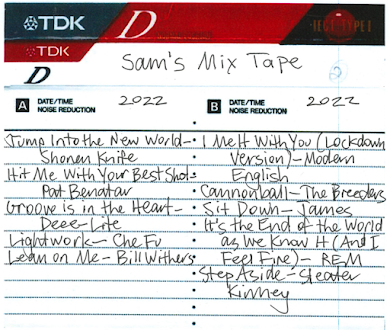
Each member of our management team got three minutes to do whatever we wanted by way of a wrap-up of the year. My photoshop skills were not up the high standard of the album cover competition, so I went with an old school mix-tape (in the more modern form of a playlist) that captured the vibe of the year. 

My single Powerpoint slide contained this image: 


The night before I jotted down a few notes in an email to myself: 

back in the 80s, when some of you weren't born yet but i was a teenager, the most up to date music technology was the audio cassette

making a mix tape for someone was a project that could take you days or weeks. you couldn't just click the instant "add to playlist button" and then move tracks around later. you had to carefully select songs, work out what order you wanted them in, use your double cassette ghetto blaster to dub from one cassette to the other. sometimes you stayed up all night waiting for a song to come on the radio so that you could record it. and then when your tape was finished you'd carefully hand-write out a tracklist and if you were arty (which I'm not) you might even do your own cover art. 

it was a real labour of love and you only did it for people that you cared about. 

i've made a mixed tape for today, but of course since it's 2022 and my last cassette player was a Sony Walkman that would have died 30 years ago, I've had to create this as a YouTube playlist! 

like all good mix tapes, it's got some dancefloor fillers and some head bangers and some more introspective moments. i'm not going to go through each track individually but I've picked them all because for me they captured something of the 2022 vibe that I wanted to share. 

it's been a year with a lot of achievements and we are here today to celebrate that

but it has also been a difficult year for me and i know it has been for many others too. there are songs on my mix tape for you that are about staring change down and meeting the challenges that we are faced with.

there are also songs about not having to face things on your own - we can't all be as awesome as pat benatar! 

my big takeaway from this year is that it is OK, in fact it's essential, to ask for help

i am usually a pretty resilient and optimistic person but this year really broke me a few times. i've had to ask for help this year to deal with personal and professional challenges and it's always been forthcoming. many times i didn't even have to ask for it - it was offered before i even knew i needed it. 

it really means a lot to me to work in a place where people genuinely look out for each other, and i hope that you'll all agree that is as worth celebrating as all our other activities and achievements.

Well, that is what I would have said, had I not burst into tears in front of dozens of my colleagues in a lecture theatre about a third of the way through what I was trying to say. 

I took a few moments, tried to keep going, couldn't, stopped again. My boss who was at the side of the stage came over and gave me a pat on the back and eventually I managed to bumble through to the end. Another colleague took my place on the podium and that, I thought, was that. 

Except that it wasn't. In the following days a few colleagues messaged me to see if I was OK and to say they'd had a hard year too. Others that knew me well said they were proud to see me present such an honest view of how I was really feeling instead of bottling things up. Someone from another team came up to me a couple of days later and said they'd really wanted to give me a hug when they saw me crying. I said hugs were always welcome, and accepted one gratefully. 

The more I have thought about this, the more I have realised that moment was really important and I shouldn't just forget about it. It shows me how much I have changed as a person and as a leader. Three years ago I would have been mortified and beating myself up thinking I'd embarrassed myself in front of all my colleagues. But now, after the past three years? I'm not too bothered that people I work with have seen that side of me. If they didn't know it before, they now know that managers are human beings too, with all our own feelings and issues. I knew that I was in a safe space with all my amazing and supportive colleagues, and that overwhelmed me. In a good way. 

Happy 2023, everyone. I hope it's a better year for all of us. And as for you, 2022 - get in the bin. I'm so done with you. 


08 March 2021

Non-use of preferred names - addressing a diversity, equity & inclusion issue in library systems

In this post I share some recent experiences at my place of work, where we've been addressing both technical and procedural issues relating to the use of preferred names, particularly in the context of trans and gender diverse library users. 

I was prompted to share this after responding to a tweet from a library sector colleague on Twitter.

I hope this post will encourage other library professionals to evaluate whether our systems are addressing our diverse communities appropriately. I would also encourage you to collaborate and step up to escalate any issues as a broader IT concern within your parent organisation. 

What prompted this? 

Late in 2020 members of our university's Ally Network were informed some students had experienced deadnaming (being called by their name prior to their gender affirmation/transition) in their interactions with the university. 

Why is this important?

According to Queensland Human Rights Commission guidance for schools and universities:

While accidental slip ups may happen when the change is new, continually and deliberately referring to a student by the wrong pronoun or a former name is discriminatory

 and 

Hearing others use the correct name and pronouns is strongly associated with positive wellbeing and can reduce mental health risks for students who are trans and gender diverse.

Most libraries in Australia will have responsibilities under discrimination legislation, but this should not just be seen as a compliance issue. Failing to provide safe and inclusive experiences both on-campus and online for staff and students is a failure to live up to the core values of our profession. 

What did we do? 

My team conducted an audit of 20+ library and corporate systems that make use of personal names. 

We identified that several important systems and services were not making use of preferred names. This included reading lists, interlibrary loans, and our primary webform for seeking help from the library. 

We then either made changes ourselves or requested the assistance of our identity and access management team in the IT area to enable use of preferred names. 

This then raised some broader issues. While the identity team could make changes in the systems that the Library owned, they couldn't make hanges in other systems without the approval of the owners of those systems. This meant, for example, that our library help form was not something we could immediately get fixed, as this had been built using the enterprise content management system owned by our marking and communications division.

At this point, we shifted the conversation beyond the Library to trusted colleagues in our HR and Information Management areas to work out next best steps. We all agreed that the university needed to address this issue in a consistent and comprehensive way. As this is a requirement under human rights legislation, we did not think changes should be subject to the conscious or unconscious bias of the owners of individual systems. 

After this discusison, we helped our Diversity, Equity and Inclusion leads in our HR area to escalate this to our Chief Digital Officer (CDO) as something requiring an all-of-university approach. It was helpful for them to have someone from the Library in the conversation who could "translate" the diversity, equity and inclusion issue involved in deadnaming into a set of requirements that IT providers could understand and take action on. 

Our CDO responded immediately and very positively to this initial request and within a few weeks a comprehensive systems audit was underway. Action is already being taken across the board to ensure the use of preferred names.  

What can you do in your library? 

  1. Reach out to the HR diversity, equity and inclusion specialists, Pride committees, and/or ally networks in your organisation to ensure you understand any legal, regulatory, or policy requirements. This will help you make the case for change with other staff who may not have a detailed understanding of how serious these shortcomings are in terms of the wellbeing of trans and gender diverse staff and students. In my case, this was the Queensland Human Rights legislation and guidance mentioned above. 
  2. Find out if your organisation has any internal diversity strategies or best practice guidelines for supporting gender diverse staff and students. Again, this will help if you need to request action beyond your own sphere of influence. At my organisation guidelines were already available covering support for trans and gender diverse students, and an associated guide to inclusive language and presentation for both staff and students. A further guide to gender affirmation/transition for employees was released around the same time that discussions about preferred names were taking place. 
  3. Conduct an audit of library systems to find out what names are being used and how (e.g. displayed online, within system notifications, email or SMS notices). This can be quite tricky depending on how names are stored and what other systems your library systems are integrated with. It will be much easier if you can find an existing library staff member or user with a preferred name (usually stored in the HR system) to help you out with this. At my place of work we were fortunate to have a staff member in our digital library team with a preferred name, who was happy to undertake this testing. If I had needed to ask a trans or gender diverse user for assistance, I would definitely have discussed with them the possibility that they could be deadnamed during this process and confirmed that this would not cause them undue harm. Alternatively I may have sought to establish a dummy test user instead, although this can be very difficult depending on your IT set-up.
  4. For systems owned by the Library, work as quickly as you can with vendors and your local identity and access management team to ensure use of preferred names. You may need to be patient in explaining the context for your query, as policies, practices and general awareness in some parts of your organisation and in other organisations could be lagging behind where you are at. Pointing your vendors and colleagues to some of the resources that you have gathered earlier in this process might be useful; don't assume that everyone even in your own organisation will be across the latest changes in policy or have a detailed understanding of the guidelines and how these should be interpreted in their own work area. 
  5. For systems not owned by the Library, work with HR diversity, equity and inclusion specialists, Pride committees, and/or ally networks to escalate a call for action. This could be via an appropriate committee or to the leadership level within your central IT division. Ask your colleagues how best they can take advantage of your networks and your expertise (e.g. in being a bridge-builder between technical and non-technical colleagues).

21 September 2020

Notes from a CAUDIT webinar: Career Design in Uncertain Times


woman in a field looking at two different paths
Photo by Burst on Unsplash

Last week I attended a Council of Australasian University Directors of IT (CAUDIT) Leadership Series webinar focused on career planning. 

This topic would normally be covered in depth as part of the annual CAUDIT Leadership Institute. The CLI is on hold for 2020 and has been replaced with a series of free bite-size sessions like this one. This particular session had also changed in focus due to COVID-19 impacts on universities that mean that many university library and IT workers are now faced with unexpected career decision making.

The session was led by Jill Benn, the University Librarian, University of Western Australia and current Chair of the Council of Australian University Librarians, and Michael Cato, the Senior Vice President and Chief Information Officer at Bowdoin College in the US.

Jill and Michael introduced us to the work of the Stanford Life Design Lab, which “applies design thinking to tackling the wicked problems of life and vocational wayfinding”. Through various Designing Your Life courses and books (available via many public libraries), co-founders Bill Burnett and Dave Evans argue that we can all apply the processes and principles of design thinking to career planning in the same way we might apply them to the development of products and services.

The first step of this process is acceptance of the current state; you can only start from where you are! The CAUDIT session started with a reflective exercise in which we were asked to think about three things that have drained us in the past six months and three things that have energised us.

Some of the things that attendees had found difficult included missing social contact with workmates, lack of meaningful holiday time, unhelpful blurring between work/life with WFH, online meeting fatigue, worries about interstate and overseas family (especially elderly parents), and the personal emotional strain involved in supporting their teams during such difficult times.

But people also noted finding better work/life balance, including having more time for exercise, family, pets, home and garden, and fulfilling interests outside of work. Some had forged more meaningful connections with workmates and enjoyed having more insights into others’ personal lives. Jill and Michael spoke about some of the silver linings that have emerged for them in their leadership roles; Jill spoke about how gratifying it was to be able to act more quickly and decisively than usual, and Michael talked about the way his team became “almost addicted” to rolling out quick fixes and having very grateful staff and students as a result.

One of the tools from Designing Your Life is the Odyssey Plan. This is a reframe of the usual five-year-plan that focuses on brainstorming three different options and seeing your career more as a journey or adventure than a single pathway. In the CAUDIT workshop this timeline was reduced; we were asked to spend some time reflecting on our current idea of what the next 6-12 months may hold (baseline), what we might do if our Plan A fell through (backup), and what we would do if money was not a concern (dreaming).

This last part of the session was quite a confronting exercise, particularly as many participants were facing upcoming job losses at their organisations. However, some people commented that being asked to visualise what their Plan B might look like had reduced their fear. Michael had earlier noted the positive power of negative thinking, including an exercise from the Stoic school of philosophy that encourages people to deliberately consider the worst case scenario; by facing our worries head-on we might be more able to brainstorm other alternatives. Another interesting thing that emerged from this exercise was that people’s dreams often have very little to do with work!

Overall this was a really useful and thought-provoking session. I have always struggled with the idea of a five-year-plan and this approach seemed a lot more intuitive to me. Especially at the moment with so much personal and sector-wide change on the horizon, it seems logical to continue to have some broad ideas and plans, but also to recognise that there will be bumps and swerves and new signposts always appearing along the way. I am planning to follow up with reading the Designing Your Life book and completing some of the other exercises in it.

25 July 2020

Notes from AI4LAM webinar: ethics, data, and artificial intelligence in libraries, archives and museums

Recently I was one of 100+ people who registered for the webinar “In Conversation with Thomas Padilla”. A video from the webinar is now available from University of Adelaide Library YouTube channel. 


Thomas Padilla is the Interim Head, Knowledge Production at the University of Nevada Las Vegas. He is the author of the OCLC Research report Responsible Operations: Data Science, Machine Learning, and AI in Libraries and the lead for significant Mellon Foundation supported work in the US on “collections as data”.

Joining Thomas as organisers and facilitators of the session were:
  • Ingrid Mason, independent consultant on research infrastructure and heritage data collections
  • Alexis Tindall, Manager Digital Innovation, University of Adelaide Library, and
  • Adam Moriarty, Head of Collection Information and Access, Auckland War Memorial Museum
  • Gene Melzack, Data Curator, Student and Scholarly Services, University of Melbourne.
Some recent projects mentioned during the webinar included:
The webinar was full of interesting ideas and it’s very hard to summarise it down to a few key takeaways! But overall the two themes that emerged for me were the need to push for library values and ethics in AI initiatives, and the challenges associated with building the multidisciplinary teams needed for successful AI projects.

Theme 1: Library values and ethics

We need to be aware that data is not just data; data is about lives and can reflect histories of oppression. Increasingly there are concerns about responsible use, particularly of indigenous collections, and these issues are amplified when machine learning is applied. Common frameworks such as FAIR and organisations such as the Research Data Alliance are not adequately addressing these concerns. 
According to the Global Indigenous Data Alliance: 
The current movement toward open data and open science does not fully engage with Indigenous Peoples rights and interests. Existing principles within the open data movement (e.g. FAIR: findable, accessible, interoperable, reusable) primarily focus on characteristics of data that will facilitate increased data sharing among entities while ignoring power differentials and historical contexts. The emphasis on greater data sharing alone creates a tension for Indigenous Peoples who are also asserting greater control over the application and use of Indigenous data and Indigenous Knowledge for collective benefit.
Commercial AI tools also need to be approached with caution, and Thomas warned against being “lured by scale” in ways that compromise our values. An example of this could be re-purposing a tool for cultural heritage use that was originally developed by governments for facial recognition of protestors. Adam also highlighted issues around the hidden labour involved in services like Amazon's Mechanical Turk and noted that just because something seems a cheap and easy option does not meant that it is something that cultural heritage organisations should jump on board with.

Further reading:

Theme 2: Building multidisciplinary teams

Thomas referred to the work being done by Nancy McGovern on radical collaboration in research libraries. According to McGovern:
The concept of radical collaboration means coming together across disparate, but engaged, domains in ways that are often unfamiliar or possibly uncomfortable to member organizations and individuals in order to identify and solve problems together, to achieve more together than we could separately.
Thomas suggested that projects need to be intentional about providing opportunities to draw on the expertise of everyone on a project team. He observed that tech folk often "consult" non-tech contributors at the start of a project but then go off and do their own thing. Participants instead need to design the project to deliberately bring conversations between people to the fore, and to build trust and mutual respect.

Thomas also talked about being "separated by a common language". This occurs when different professional groups use the same words to mean different things (e.g. a humanist will have a different idea of scale from a machine learning specialist). How do we bridge those gaps in language and culture between different professional groups? We need to be explicit about assumptions and agree on terminology as part of setting projects up.

In terms of roles and competencies, Thomas noted that organisations need someone who can be a translator between different groups. But it can't just be that translational person's responsibility, as this is not sustainable. Organisations need to shift more broadly, and this requires leadership and managerial efforts to build a culture of collaboration and innovation. There are also questions around how to retain people who are confident and competent in this emerging area; what can we do to ensure people want to come and work with GLAM institutions rather than applying these skills elsewhere?

There was some discussion about building career paths and skills within institutions, and the pros/cons of outsourcing vs building internal capabilities vs a combination of these. In terms of building internal capabilities, Thomas mentioned at least three strategies:
  • The Carpentries. There is now a strong body of evidence that those pedagogies work and they are also reasonably affordable.
  • Collections as Data: 50 Things You Can Do. A list compiled by the Always Already Computational project, of 50 things staff in cultural organisations can do to “open eyes, stimulate conversation, encourage stepping back, generate ideas, and surface new possibilities” in relation to collections as data.
  • Workplace learning. Thomas gave the example of a staff professional development approach at Michigan State University Library. In consultation with supervisors, any staff member could devote 25% of their time could to shadowing or cross-team projects. This was re-evaluated as part of the annual performance review process but could be ongoing. This led to cross-fertilisation, up-skilling, and was a great way for people new to the profession to try different things.

Further reading:

Radical Collaboration and Research Data Management [special issue]. Research Library Issues, no. 296 (2018).

About AI4LAM

The webinar was the first public event held to gauge the level of interest in establishing an ANZ chapter of AI for Libraries, Archives, and Museums (AI4LAM), “an international, participatory community focused on advancing the use of artificial intelligence in, for and by libraries, archives and museums.” Further information about AI4LAM is available via their website.

The organisers of the local webinar are a small group of professionals interested in the role of computational and curatorial techniques that advance artificial intelligence in cultural heritage practice and allied areas in research (e.g. digital humanities). 

You can register interest in participating in future events and efforts to establish the local chapter via an online form.

09 August 2019

Boundary Spanning Leadership – reflections from a training course

​Along with a number of staff members at my library, I attended a half-day workshop last week on the topic of boundary spanning.

This was the first time the course had been offered at my workplace. It was run by our university HR Staff Development team, who delivered training ​materials licensed from the Center for Creative Leadership at no cost for staff.

CCL have been exploring boundary spanning as a management topic for a few years now, arguing that these skills are urgently required because most complex organisations and issues now require working across teams or organisations or disciplines to get to successful outcomes.​ This is the definitely the case in an Australian university!

The course covered three ways in which leaders, groups and organisation can span boundaries: managing boundaries, forging common ground, and discovering new frontiers. Six practical tactics were associated with these:

Managing boundaries

  • Buffering - defining boundaries to create a space of safety
​Examples: Defining shared values, clarifying roles and responsibilities, establishing explicit ‘rules of engagement’ with other teams, developing team charters, away-days / retreats, rewards and recognition, internal communications, team social events
  • Reflecting – looking across boundaries to foster respect and build an understanding of the similarities and differences between groups
Examples: Extend invitations to other groups to attend meetings and socialise, secondments, sabbaticals, job rotation, ‘decoding’ group jargon for others

Forging common ground

  • Connecting – stepping outside boundaries into a ‘third space’ to link and connect as individuals, forming new networks and deeper relationships 
Examples: Identify ’establish ‘third spaces’, cross-group mentoring and buddy schemes, create diary space for cross-team relationship building, ‘town-hall meetings’ in support of larger scale initiatives   
  • Mobilising - developing a shared space, common purpose, and shared identity across group boundaries (moving from “us” and “them” to “we)
Examples: Cross-functional project teams, working on building a sense of community after mergers/restructures, diversity initiatives, establishing a brand or identity for a cross-group service 

​​Discovering new frontiers​

  • Weaving – establishing a creative space (e.g. to develop innovative ideas or new solutions) in which group identifies remain distinct but are interwoven to add up to a larger whole 
Examples: secondments in different sectors, participating in cross-university consortia (e.g. CAUL, CAUDIT) or external engagement activities (e.g. with a focus on local/regional development), using fresh combinations of staff 
  • Transforming – bringing multiple groups together to reimagine and reinvent, moving beyond the known context and cutting across established norms, practices and identities
Examples: use cross-functional teams to establish ‘alternative futures’, cross-functional work as the norm, continually question legacy boundaries, explore collaboration with those usually thought of of as competitors, knowledge-exchange and partnerships outside your own sector / profession / industry

I found a lot of the course highly relevant to my job and my library's context. My key takeaway was that the tactics above should be addressed in a sequential order. In my own library's context, I understood this to mean that building a strong team identity and understanding of our shared purpose is essential if we are to then go on to successfully work across boundaries with other teams in the universities, other libraries, and other kinds of partners in the community.

Overall, I would highly recommend this training course and the associated material from the CCL website (see below). It provides a lot of practical guidance and options to consider in complex environments where collaboration is essential, but not always easy.

Further reading:  ​​

White Paper: B​oundary Spanning in Action: Tactics for Transforming Today's Borders into Tomorrow's Frontiers. ​

25 April 2019

Libraries, leadership, and overvaluing expertise

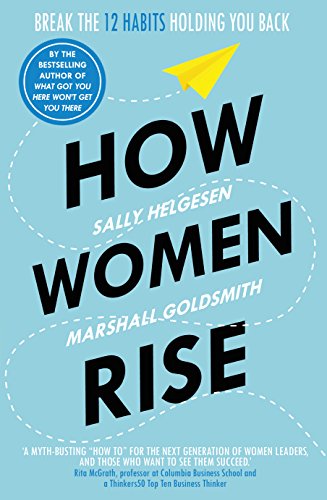
I am not usually a big reader of the business self-help books that pop up in airport bookshops. However, I took notice when a colleague recommended How Women Rise, because I respect her and trust her judgement and because her career path is one that represents a possible direction for my own. I've now borrowed this from my public library service twice and recommended it myself to some co-workers, so I thought it would be good to blog some reflections. 


Cover of How Women Rise by Sally Helgesen and Marshall Goldsmith
I'm not going to review the book as a whole or go through the whole list of self-limiting behaviours that the authors observe through their executive coaching practices as being more prevalent amongst women. It's useful to point out up front that Helgeson and Goldsmith are aware of the many structural barriers to women achieving their full potential in the mostly-corporate environments from which they draw the book's case studies. However, they see themselves addressing a different set of challenges, which they argue are more within women's immediate control. If you can take this approach at face value you will probably find yourself able to get something useful out of this book. For a more #critlib view you will probably want to bypass their sidestepping of these structural issues and read something else entirely!

The one habit (#3) that jumped out at me from my own career and observing others in libraries is overvaluing expertise:
Trying to master every detail of your job in order to become an expert is a great strategy for keeping the job you have.... you put enormous effort into learning every aspect of your job and assuring your work is letter-perfect. This feels proactive, but it can set you up to remain on an endless treadmill, constantly setting a higher bar for yourself as you seek to always go the extra mile.... 
Of course, we're not advocating sloppy performance. And we know that skill and knowledge are required for success. But if you want to rise in your field or your organization, expertise will only take you so far. That's because the top jobs always require managing and leading people who have expertise, not providing expertise yourself. (86)
The authors discuss the difference between intrinsic and extrinsic rewards, and the way that mastery of a work area provides both the satisfaction of knowing you are doing something really well (intrinsic) and a pathway to having your contributions recognised by others (extrinsic). This is good up to a point, but can become a problem for women who want to move into leadership positions for three reasons:
  • Learning every aspect of your job to the highest level uses up mental bandwidth that could be shared across other equally important areas
  • Doing your current job to perfection only demonstrates that you're great at the job you're in now, not the jobs that you may want to move to in future
  • Your expertise makes you indispensable to your boss, who may then have an interest in keeping you where you are. 
Meanwhile, the authors argue, male colleagues are likely to be focused on doing their jobs well enough, while still leaving time to build the relationships and organisational / industry visibility that will help them progress their careers. 

The authors also describe four types of power that we can have within organisations. Expertise is only one of these, the others being connections/relationships, personal authority, and positional power (i.e. where we stand in the organisational hierarchy). These are complementary and ideally would be in balance because "cultivating expertise at the expense of other kinds of power will not position you as a leader" (93). 

(I might digress slightly to say that the word power is a bit fraught for me. I think it has some poor connotations for lots of people, probably because we have all at some point in our careers been on the receiving end of someone else wielding power - probably positional power - over us in a negative way. The authors' definition of power in this book is a bit different. They describe it as "influence potential" and argue that "if you want to influence the world in a positive way... you have to have power" (95). It is hard to summarise this, but I think they see power as the ability to articulate your goals - both for your organisation and yourself - and work purposefully towards them, which is definitely a bit more palatable a concept.)

So, how does the overvaluing of expertise play out in libraries? I have seen this in my own career and in various positions and workplaces in a range of ways, including:
  • Reinforcement of rigid distinctions between 'professional' and 'para-professional' roles, and between different types of professional roles (e.g. front-of-house vs back-of-house)
  • Suspicion of team leaders and managers who have not 'risen through the ranks' by developing a deeper and deeper technical understanding of the area they are responsible for
  • Locating specialist expertise in one role that is essential for the organisation strategically but a dead-end in terms of career progression for the person in it - this is particularly obvious in emerging areas (research data management, I am looking at you) but also seems to apply to other types of roles (e.g. see this blog post about e-resources management)
  • Length of service as a proxy measure for ability - a sense of entitlement to higher positions by virtue of having the most years of experience
  • Pressure on students and early career librarians to specialise in a sub-discipline (cataloguing & acquisitions, liaison, public programming) and/or commit to a sector (schools, public, academic, special)
  • Negative attitudes towards those who 'jump around' (including envy of the career progression that can result for those prepared to take the very real risks associated with these leaps)
  • In recruitment and development, weighting library experience over generic transferable skills such as customer service, communication, teamwork, advocacy, IT skills, and problem solving, even when the generic skills are more important to being successful in the position
  • Lack of awareness that many skills needed for management positions cannot be easily gained alongside mastery of a work area or function, unless specific attention is paid to them as development goals (e.g. recruitment, health and safety, financial management, vendor management)
  • Consolidation and validation of expertise-based silos / team structures at the expense of cross-disciplinary groupings. 
I don't have any firm thoughts right now on what this means for us at a sector or organisational level, but it's definitely made me think about my own views on expertise (my own, as well as that of others). By highlighting this as a potential issue to be aware of, this book has definitely helped me make sense of some challenges I have had transitioning into a more senior role and given me some food for thought about how I can ensure I don't close down opportunities for myself and others in future. 

Further reading

Helgesen, Sally, and Marshall Goldsmith. 2018. How Women Rise: Break the 12 Habits Holding You Back. Penguin Random House.


10 March 2019

Reflections on ALIA QLD Springfield Library tour (public and academic)

Yesterday I went on a library tour jointly organised by the ALIA QLD and ALIA QLD Library Technicians groups. The tour took in two libraries, the Ipswich Libraries Springfield Central branch (public) and the University of Southern Queensland Springfield campus library.

It was a great day out, and I learned a lot by observing what was happening at these two very different libraries. Thanks to the ALIA organisers for pulling this event together and arranging car-pooling and to the two libraries for hosting our group.

Tour attendees at Springfield Central Library (top - with our host Tonille second from left) and at the USQ Springfield Library (bottom, with our host Clare second from left).

About Springfield

I had never been to Springfield before going on the tour. The suburb has an interesting history, being a newer development that is part of Greater Springfield, Australia's largest privately-owned master-planned city.

The demographics of Springfield are quite different compared to Queensland and Australia. Springfield has a much lower median age, a lower tertiary participation rate, a much higher proportion of residents with two parents born overseas, a higher proportion of full-time employees and stay-at-home parents, a much higher household income, higher levels of home ownership, and a much lower proportion of families without children. (Interestingly, I saw billboards for at least two retirement communities being developed in the area, so things could change quite dramatically in the future with an influx of retirees.)

You can read more about Springfield on Wikipedia and on the Queensland Places website.

Ipswich Libraries Springfield Central branch

The Springfield Central Library is located in a brand new building at the Orion Springfield Central shopping centre. Our tour guide was Tonille, one of Ipswich Libraries Customer Service Officers. 

As a new build, Springfield Central provided a testbed for a lot of innovative technology, collection management, spaces and services. The library has been hugely successful and within just a few months of opening had contributed to increases in membership, visits and loans for Ipswich Libraries

One of the most interesting parts of the tour for me was to see what RFID tagging of the collection was enabling. In the picture below (moving clockwise from bottom-left), you can see:
  1. A pretty standard RFID-based self-checkout machine.
  2. Tonille demonstrating the use of the 24-hour pickup lockers. These are similar to Australia Post's parcel lockers and are located in the shopping centre carpark, enabling people to pick up their library holds out-of-hours.
  3. Returns shelves. Users simply pop the books back on the shelves and voila!, they are automatically checked in. (Brisbane City Libraries also have these at my local branch - they are great).
  4. AMy - the Automated Materials Handling machine. As books are dropped in the returns chute, they go up a conveyor belt, are automatically checked back in, are sorted automatically into a range of bins, depending on where they need to go next (back on the shelves or off to another library if a library user has placed a hold). 

Springfield Central has also done some interesting things with organisation and display of their collection. Matt Pascoe presented on Springfield's use of retail techniques in their "market place" at the Asia-Pacific Library and Information Conference (APLIC) last year, and I highly recommend looking at Matt's presentation to get a sense of just how successful this has been. 

In the picture below (moving clockwise from top-left, and then to the centre), you can see:
  1. bookshop-style display in the market place of a genre (science-fiction)
  2. more organisation by genre in the classics section
  3. subject-based signage (with matching spine labels) for children's non-fiction
  4. general non-fiction divided into large subject areas, then Dewey-fied within that
  5. current magazine and newspaper display
  6. broader view of part of the market place
  7. bookshop-style display of staff member's selections (these and other sections in the market place have a backup list of titles so that these sections can be quickly restocked to always look full and inviting)
  8. picture book storage - no organisation at all in this particular unit
  9. signage (with matching spine labels) for the general fiction collection, which is broken into genres, then alphabetised by author name within genres. 

In terms of spaces, my overall impression was that the library was bright and cheery, and that a lot of effort had gone into zoning the library for its multiple uses. There were group and individual booths suitable for both collaboration and quiet study, bookable meeting rooms (with integrated large screens), and larger event spaces that were made more flexible through the use of sliding doors. In the picture below (clockwise from top), you can see:
  1. Group study spaces. Eating and drinking is allowed but users (particularly teenagers!) are strongly encouraged to do the right thing and ensure that rubbish is placed in bins. During our visit we saw two security guards interacting with teenagers in the library's spaces in a firm but non-intimidating way. (In one case two teens were being supervised by a security guard as they cleaned up the lift after a glitter confetti explosion!) 
  2. Entry with service desks. Things to note include that these desks are height-adjustable and also the neat cable management solutions (cables are grouped together within flexible snake-like pipes that go up into the ceiling rather than into walls or floors). 
  3. Individual study booth in a quieter area of the library. 

Two things that I could not get photos of were the children's space (which was packed out for an informal storytime) and the excellent facility for changing nappies, breastfeeding (bar fridge and microwave included), and providing a time-out space for kids who may be having a meltdown.

In the picture below (clockwise from top), you can see:

  1. Our host Tonille, inserted into an augmented reality (AR) video where she was shooting alien spacecraft. The real Tonille was actually standing in front of a green wall on the other side of the room!
  2. Signage setting expectations about noise associated with a public event. 
  3. One of the two 3D printers located in the makerspace. These are free to use for library members over 13 years old and you can book a 45-minute slot with a "makerspace champion". 
  4. Staff member's desk with all the 3D printed objects awaiting collection. 
  5. Promotional poster for a ukelele workshop run by a local musician. This event was on while we were in the library and by the end of 2 hours the group was performing a rendition of "Stand by Me"!
  6. The Library is one of several sites for community immunisations - I don't recall ever having seen this in a library before and thought what a great idea it was to join up libraries and health providers to offer this essential service for kids in a familiar and less clinical environment. 


I was super-impressed with this public library! Although not everything I saw would translate into an academic library environment, I took away lots of ideas to discuss with colleagues.

University of Southern Queensland Springfield Library

At USQ, we were kindly shown around by Clare Thorpe, the Associate Director (Library Experience).

Clare explained that there has been a library at Springfield since the campus was established in 2006 and that the current library space had been refurbished under a year ago.

Interestingly, although three quarters of USQ's enrolments are for online study, many students live within 100 km of one of the campuses so there is still demand for study space. Clare noted that the majority of USQ Springfield students are not school-leavers, but tend to be more mature people balancing a range of work, family, and study commitments.

In the picture below (clockwise from top), you can see:

  1. A large multi-purpose area. The refurbishment focused on making spaces as flexible as possible, with furniture able to be moved as needed and removed easily for events. Note also the full-height windows. These replaced much narrower windows, letting in more light and integrating the indoor and outdoor spaces in keeping with the Queensland lifestyle and USQ Library's overall ethos of openness and transparency. 
  2. The Library now includes spaces for the secure display of objects from the USQ Art Collection. 
  3. Clare let us in on this excellent library refurbishment hack! By simply placing new wooden end-panels at the end of their existing stacks, they were able to completely refresh the look of the collection spaces without replacing the shelving.
  4. The Library is open 24/7 (with the exception of the collection area, which is locked when the library is unstaffed). The space includes this full kitchen area with sink, microwaves, and waste disposal. Clare noted there had been no issues with students having food in the space. 
  5. The refurbishment included a new entrance with pod-style service desks. USQ does not operate a combined library-IT service model but the library and IT desks are located next to each other in the same space. Opposite these desks there are a number of small consultation rooms. These can be used by students consulting with staff on the Springfield campus but are also equipped with videoconferencing facilities for times when staff are only available at other USQ campuses. 
  6. Quiet study area. The library space has two main zones, one more suited for lab and groupwork and the other concentrated on the collection and spaces for quiet study. Note the use of the same colour (green) but in a more muted tone. Lighting is also more subdued in this area. The student carrels are extra wide and padded in a soft felt-like fabric that not only added visual appeal but I imagine would also help with soundproofing. As with the other spaces there were plenty of power and USB points. 


I was not able to get photos of the main student space as this was full of people. This was a mixed-use space with a computer lab at one end, and study space for those with laptops at the other end. The library also has an Assistive Technology Room that is part of USQ's services in support of students with a disability.

Behind the scenes, Clare showed us processing areas for postage to off-campus students. One thing that emerged in the discussion that I was not familiar with was USQ's engagement with a specific disadvantaged cohort of library users: students who are in incarcerated. As students in correctional facilities do not have access to the internet, they are excluded from most higher education. Through its Making the Connection program, USQ has developed secure offline learning platforms. The library also contributes to this program by ensuring students have access to the resources that they need. If you are interested in finding out more about digital equity issues as they relate to prisoners' access to education, you may like to read this 2017 ASCILITE conference paper by academics from USQ and RMIT.


22 February 2019

Conference report: International Digital Curation Conference 2019

On 5-7 February I attended the International Digital Curation Conference in Melbourne. ​​

The conference consisted of two days of presentations, panels, lightning talks, and posters. This was followed by an unconference day designed to promote informal discussion and networking on topics suggested by the participants on the day. 


More details if you'd like to follow up:
This was the first time this conference had been held in the Global South and it attracted an audience of over 250 participants from a wide range of countries. I have reviewed abstracts for this conference for quite a few years so I was really chuffed to finally get to experience it! The conference was very friendly and it was a chance to reconnect with many former colleagues as well as to meet some people face-to-face that I only know from Twitter. 

One of the things that I enjoyed the most about the conference was the large number of archivists attending and the many archives-related presentations. I started my career as an information professional in archives and have written previously about the value for librarians of developing a deeper understanding of archival theories and practices, particularly when working in areas such as research data management. The conference brought home to me my own need to refresh and update my professional knowledge of what is happening in the broader world of digital preservation and cultural collections in organisations other than universities and libraries (i.e. I need to get out more!)

My top three papers (though it is really hard to choose just three – I encourage you to explore the full program) were:

Developing Culturally Competent Data Publication Resources
Ryan Stoker and Jen McLean, University of Sydney

This paper received the top paper award from the program committee based on reviewer feedback.

Ryan and Jen talked about the process they are going through to revise their library guide on data publication in light of frameworks emerging from the National Centre for Cultural Competence at USyd. This has involved so far self-assessment by library staff of their own perspectives and biases, addition of indigenous cultural & intellectual property rights (including links to AIATSIS ethics guidelines), and inclusion of indigenous community considerations in sections on sensitive data.

The lessons learned are feeding into other projects including the institutional repository redevelopment and a university digital asset management system (DAMS). They are reviewing digital collections priorities, exploring new kinds of metadata (such as traditional knowledge labels) and ensuring licensing / access information is captured appropriately.

Progress in Research Data Service development: An international survey of university libraries  Slides 
Mary Anne Kennan, Charles Sturt University

Mary Anne presented on the results of the latest round of international surveys conducted from 2014 onwards across a range of countries including the UK, Ireland, Australia, NZ, Canada, Germany, and the Netherlands. The results will be published in a journal article soon.

This presentation helped me to see where my place of work is currently sitting compared to peers in terms of our service provision, organisational structures, drivers, skills gaps and other challenges. Mary Anne and her co-investigators have also come up with a really interesting maturity model for research data management services.

Human Security Informatics, Global Grand Challenges and Digital Curation
Anne Gilliland, University of North Carolina

This was a very thought-provoking paper on emerging work in Human Security Informatics (HSI). HSI is focused on how current digital infrastructures fail to meet the needs of many vulnerable communities due to systemic inequities and inaccessibilities, and lack of institutional will, coordination and capacity.

There are many cases when records and archives are used as mechanisms of oppression and appropriation, and where vulnerable communities (e.g. refugees, abuse survivors, those affected by natural disasters) must interact with records but may have no “bureaucratic literacy” or the relevant language skills to do this.

The case study presented related to the needs of displaced populations that are being explored through the Refugee Rights in Records Project. Given the current tone of political discussions in Australia right now this was very timely (but also really depressing). ​

​Three practical things I plan to do as a result of attending this conference are:
  1. Develop a digital preservation strategy for my institution's repository by end of 2020
  2. Explore connections between our repository and the Analysis and Policy Observatory to enable our research to be more accessible to public policy audiences outside of academia
  3. Explore the role that data packaging transfer tools (such as the Cloudstor Collections service from AARNet) might have in new data repository workflows. ​

08 October 2018

Reflections on the 2018 Software Licensing and Asset Management conference (SLAM)

Recently I was funded through a Queensland University Libraries Office of Cooperation (QULOC) Professional Development Scholarship to attend the Software Licensing and Asset Management conference (SLAM). I am very grateful to QULOC for this opportunity.

This annual event is organised by the University Software Licensing Community, a community of practice under the banner of the Council of Australasian Directors of IT (CAUDIT).The 2018 event in Brisbane attracted around 50 attendees, including procurement specialists from CAUDIT, delegates from universities (from areas including IT, finance/procurement, risk and audit) and vendor representatives.

The varied program included keynotes relating to strategic trends such as artificial intelligence and cybersecurity; case studies from CAUDIT member organisations of innovative approaches to software asset management and licensing; and vendor/sponsor negotiation updates and product showcase.

Why I attended

I’m responsible for managing my library’s portfolio of software applications, and there are significant licensing costs associated with this. Over the past three years, my team has conducted a rolling series of service reviews to ensure we are making the most of our systems, and I have more actively negotiated with vendors to try to achieve containment of costs in this area.

I wanted to further explore the methods and practices used by other professionals in the higher education sector. In applying to QULOC for funding, I said in my application:

University libraries benefit significantly from collaborative approaches to procurement of library resources, but we do not commonly apply similar approaches to software licensing. While the CEIRC (CAUL Electronic Information Resources Consortium) Terms of Reference do not preclude discussion of technical infrastructure, in practice the focus is strongly on information resources. As CAUL Statistics bundle technology costs with other operational costs, there is a lack of even basic information about software spend in libraries across the sector, however this should be estimated at a minimum of $10M and may be much higher. Consortial models for library resource purchasing may not transfer directly to software, but there is little professional discourse about what other collaborative approaches could be taken. Becoming more aware of best practice in this area would enable me to better take advantage of the expertise located elsewhere in my own organisation and also to promote different ways of doing things through my professional networks, including the new CAUDIT Library IT Community of Practice that I recently established. 
I will be reporting back to QULOC with a written report and in a webinar to be held in about a month (stay tuned for details). In the meantime here are a few key takeaways.

Takeaway 1: There are many similarities in the roles, organisational contexts, and issues faced by library staff and our counterparts managing software assets. 

Both groups:
  • provide resources/tools to staff and students that are essential to support the core business of universities in education, research and administration
  • are perceived as being cost centres and must increasingly communicate the value they provide to senior stakeholders and demonstrate alignment with strategic agendas
  • must ensure compliance with law and contractual obligations, in environments where users have ready access to “shadow” channels that provide quicker and easier solutions than official channels
  • manage portfolios of information assets with complex access management requirements for different cohorts (e.g. alumni, adjunct academic staff, industry affiliates), and 
  • deal with similar market conditions and vendor practices, including sole- and limited-supplier procurement, unsustainable pricing, and deliberately opaque licensing terms and conditions.
Given these similarities it would make sense for library staff who procure and manage software and resources to expand their informal networks to include software licensing colleagues, and to be aware of and contribute to best practice across their organisation as a whole.

Takeaway 2: Usage statistics for software, just as for e-resources, can be used to drive decision-making, inform negotiations with vendors, and contain costs. 

SLAM introduced me to the concept of licence optimisation through some interesting case studies.

On returning to work, I checked with my team on concurrent licence usage data for one of our bigger applications. This identified possible cost savings that could be achieved through licence reduction and configuration changes (e.g. by reducing the length of timeouts).

Unfortunately the terms of the three-year contract we have entered into for that product favour the vendor and will probably not allow us to achieve these savings. However, I will now be more aware for future renewals and new contracts of the need to negotiate an annual change in licence numbers as our business needs change (“true-up / true-down” in the language of the software licensing specialists – yes, they have their own jargon too!).

Takeaway 3: In other areas, vendors are being challenged to justify the value of “support and maintenance” costs on top of software licensing. 

A number of SLAM participants were critical of the value for money provided by annual agreements for software maintenance and support.

I am keen to find out from our software licensing support team what alternative models are being explored for non-library software. We already have one supplier who operates under a pay-as-you-go support credits arrangement that provides total transparency about the time and cost for each support ticket. It would be interesting to see how prevalent this model is and whether this could be rolled out with other library vendors.

I am not optimistic this would be possible in the short term. I imagine our vendors will be reluctant to give up one of their biggest cash cows. It is definitely something to feed into future procurement processes and renewal negotiations though. ​

Takeaway 4: There are untapped opportunities for libraries to collaborate on software procurement and licensing, but new structures and skills are needed to progress these. 

While strategic procurement was not as much of a focus at SLAM as I had hoped, I nevertheless gained a new appreciation for the level of cooperation amongst universities in purchasing all kinds of software to support education, teaching and university administration.

As the next two to three years will (hopefully) involve some important shifts in the library systems market, the time is right for university libraries to develop medium-term technology roadmaps and to start collective considering how procurement processes could reduce costs (including the burden of large-scale tender processes), increase transparency, and open up new forms of collaboration (including shared systems, an approach taken in other jurisdictions including Wales, the US and Hong Kong).

As mentioned above there is currently a lack of basic information about how much Australian university libraries are collectively spending on software. One recommendation I will make in my report to QULOC is for the QULOC ICT Working Group annual survey of library systems to incorporate some new questions (carefully worded to ensure commercial-in-confidence agreements are not breached) to provide the community with some baseline data to support further work in this area. 

The event provided an opportunity to reflect on the enduring value of previous training I have been supported to undertake (in particular, the CAUL Negotiation and Influencing Skills workshop, which I have highly recommended before) and to consider building on this with more professional development focused on procurement skills. 

Attending this event also reinforced my commitment to the concept of a Library IT Community of Practice operating outside of the vendor-driven user groups for major products. While there are also connections that need to be made with CAUL programs, CAUDIT structures usefully facilitate cross-pollination with other technology-focused communities of practice, not just in software licensing but also in areas such as IT security, enterprise architecture and project management. 


28 August 2018

Blogging for library and information professionals - notes from an ALIA panel

Last night I was a  panellist at an ALIA Queensland event on blogging for library and information professionals. My co-panellists were Alisa Howlett (www.acrystelle.com) and Amy Walduck (Pineapple Glam), and the session was chaired by Michelle Hughes.

The event was streamed on Facebook Live and is available to watch if you missed it last night. My raw notes for the event are below. Not all of these thoughts made it into the panel discussion, which was a lot more free-range!


My main takeaway from the event is that there is no one 'right' way to approach blogging. Although the three of us had similar motivations for blogging (sharing with others, contributing to professional discourse, maintaining a credible online presence), the platforms we used, the ways we come up with ideas, our writing styles, and our processes from inspiration through to a final product were all totally different.

The panel discussion is making me re-think my own blog and plan some improvements to it, including possibly moving to another platform, re-theming, paying more attention to visual communication (thanks, Amy!) and considering ways to highlight popular or curated posts better (thanks, Alisa!)

Tell us about your blog - is it professional or personal?

Mostly professional, though over time I have probably started to provide a more personal take on professional issues.

I know from feedback from readers that posts that I felt were verging on the too-personal have actually resonated the most. By nature I am a private person, so sharing thoughts about things like impostor syndrome, the negative impacts of being a perfectionist, and being ambivalent about stepping into a management role does not come easily. However the thoughts and feelings that I have shared reflect my experience of the complexity of professional life as a librarian in the 21st century, and having people respond with recognition and empathy has helped me to become more comfortable with opening up in that way.

Reasons for blogging and what you hope to get out of it?

I had actually forgotten this before I started preparing for the panel, but I started regular blogging for a work project well before I had my own blog. The funding agency required the project to communicate and it was free and easy to set up a Blogger blog to do that. The project team collectively wrote thirteen posts over about a year.

Once I had jumped into blogging I realised that it was a great way to write regular shorter pieces on topics that were of interest to me and hopefully others. I liked the immediacy and the non-scholarly nature of it, which made it easier to present more provocative or ambiguous viewpoints.

Do you set goals for how much time you dedicate?

I don’t have specific goals around writing time but I do include a blog writing goal in my performance plan with my supervisor. For the past two years my goal has been to write six posts a year so it is not a particularly hard one to achieve.

I participated in #blogjune for a couple of years, where the goal was to write a blog post a day for the month of June. It is intense but fun! I did write a post a day one year and a post a week the following year. Now I just stick to my own not-very-regular schedule.

I have been along to the ALIA Shut Up and Write sessions and used some of those for blogging. It was great to have some external impetus!

It’s probably important to note that there is also non-writing work involved in maintaining a blog, such as:

  • Sourcing images (with appropriate licences for re-use, of course!)
  • Setting up and renewing your domain name
  • Responding to comments (including dealing with spam, which is mostly filtered but not always)
  • Keeping static pages up to date and fixing broken links. 

Do you have a specific theme/subject you stick to?

Most of my posts are about career or professional development issues of one kind or another.

I sometimes use the NewCardigan Glam Blog Club theme as a starter.

At times I’ve used my blog for a 'behind the scenes' look at other people’s jobs. I find it really fun to do Q&As with colleagues that have jobs that are maybe a bit mysterious to other people. When research data management was still emerging, I did a couple of Q&As on that. Last year I did another series featuring colleagues of mine that include non-coding IT skills as part of their professional practice.

I’ve also used my blog as a place to publish submissions that I have made on industry issues, such as ALIA’s publishing strategy consultation and a letter to my MP about the de-funding of Trove.

I also often include references to further reading. Sometimes I wonder if a bibliography is unnecessarily nerdy, but a lot of my ideas for writing come from what I'm reading. Sometimes I like to review or reflect on the literature in a bit more depth, rather than just sharing a link on Twitter. Acknowledging that inspiration and encouraging others to do more professional reading is something I am always happy to do.

How do you keep motivated to write?

I don’t have to try that hard to stay motivated. I usually enjoy the writing and editing process. Unlike more academic publishing you also get the satisfaction of hitting the ‘publish’ button yourself when you are done and not having to wait months and months to see it appear in a journal.

I don’t really force myself to write now if I don’t feel I have something to say that people would be interested in. I would rather write fewer more substantive pieces on things that I hope will really resonate with people.

How do you attract people to read your blog?

I usually include the web address for my blog in my biography for events and publications and in my social media profiles.

Twitter is the main channel I use to promote specific posts. Three quarters of the traffic to my blog comes directly from Twitter. I also sometime link to my posts on LinkedIn.

I am pretty sure a significant amount of my Twitter traffic comes from the Aus GLAM Blog Bot, which autotweets my new posts several times on the day of publication. One thing that I have noticed is that the time of publication makes a difference to the size of the audience, so having a notification go out a few times at different times of the day really helps.

I try to provide reasonably descriptive titles. Looking at the stats for my blog, I can definitely see that a more provocative headline draws people in.

I’m not much of a visual communicator, but I do try to include at least one image in each post to make it more visually interesting.

Has blogging improved and made you feel more confident in your writing and is it a completely different style?

I’ve always enjoyed writing and I did a journalism major as part of my first degree. Although I realised quickly that journalism wasn’t going to be a career path for me, news writing training provided me with a good grounding in non-academic writing.

I’ve also done writing-for-the-web training with different employers, and that’s been helpful too. I would recommend writing-for-the-web training for anyone in the library sector as the principles will make all your writing better.

Blogging is different from other professional writing that I do. Scholarly writing requires a lot more time and a lot more effort to comply with style guides, referencing systems, and the general requirements such as including a literature review. If I am submitting to a journal or conference proceedings, I would usually run a draft past a writing mentor or peer reader when doing that kind of writing, as the standard is very high.

I also have to do a lot of business writing at work e.g. reports and project documents. There are a lot of similarities between blogging and that kind of writing, in terms of keeping paragraphs short, using plain English, and making use of headings and bullet points to structure your writing for easy reading by busy people.

Any interesting connections or opportunities that have come out of a blog post you wrote?

Last year I published a series of posts based on a presentation that I gave at the New Librarians Symposium. One of the things I showcased in that series was the Skills Framework for the Information Age (SFIA), a widely-used IT competency framework.

I received an email from one of the senior people at the SFIA Foundation saying that they found my application of SFIA to the library world interesting to read. As a result of that series of posts, I also had a number of students and recent graduates get in touch with me via Twitter, which was really gratifying and expanded my Twitter network quite a bit.

What tips would you give to someone who is wanting to start a blog?

I would encourage anyone starting out to think more about the audience than about yourself. Rather than thinking about writing as self-expression (what do I want to say?), think about what your audience needs or wants, and what new or interesting perspective you can bring that no-one else is currently providing.

You could try guest blogging or writing short pieces for newsletters like ALIA's InCite first to get a feel for the effort that is required. It is also possible to publish pieces via LinkedIn now; this could be a good way to get started on a smaller scale with your existing professional network.

Always be ethical and professional and make it explicit somewhere on your site that your views do not represent those of your employer. Being aware of any formal social media policies that your organisation may have is really important, as these policies can differ quite a bit depending on where you work.