30 June 2017

IT skills for librarians: Q&A with Julie Toohey (Griffith University) about change management

This post is Number 6 of 8 in a series arising from a presentation that I will be giving at the New Librarians Symposium 8 on 25 June 2017 in Canberra. You may want to start reading with the first post in the series

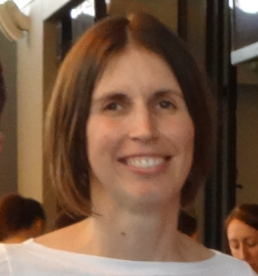
For this post I asked my colleague Julie Toohey about how she got started building her skills in change management, and how this fits within her current role as a Health Discipline Librarian in Griffith University's Library and Learning Services.

Thank you, Julie!

Can you briefly describe your your current role and your career pathway to where you are now? 

I initially started at Griffith twenty-two years ago as a casual library clerk and at the time was studying for a library technician diploma however a Librarian talked me into a degree instead and I've never looked back.

I've worked in many different types of positions over the years and currently I am the Health Discipline Librarian for the Gold Coast campus. I've also taken on many secondment opportunities which at times seemed scary but I did so to develop a wider, more relevant skill set. Sometimes you just need to jump in with both eyes wide shut!

Secondment opportunities have included Team Leader for Acquisition Team, Higher Education Research Data Collection (HERDC) Coordinator, Senior Change Manager for the Griffith Experts project; and Library and Learning Services Manager, Sciences.

Stepping outside the organisation I also had the opportunity to co-facilitate the national Australian National Data Service Health and Medical Data 23 Things Research Data Webinar series with Kate LeMay. The series was held over a 10 month period.

What were the circumstances that led you to identify change management as something that you wanted or needed to develop further?

Basically I was approached by my Director to take on the Senior Change Manager role for she believed I had the necessary skill set to achieve objective outcomes.  She also felt that I:

a) was good at engaging/communicating with the academic community
b) understood the structure of the university
c) understood the politics of institution
d) wasn’t afraid to keep moving on, and
e) genuinely liked dealing with people.

I firmly believed in the product [Griffith Experts] and I was up for the challenge.  And I really admire my Director and I didn't want to let her down.

What formal or informal development options were available to you to develop your change management skills and knowledge? How did you initially get going, and do you have plans to continue to develop in this area?

I completed a Project Management workshop in 2014 and I also minored in Business so even though I’ve never worked as a Change Manager before, I’ve always been aware of the importance of the role. Managing change is not just about communication plans, milestones and tasks, it’s also about managing people, their expectations and their emotions. And pressure. It’s also about managing pressure and being accountable.

In addition to the new role, I was also required to join a new team in the Project and Planning Office reporting directly to the Project Manager. It was a very steep learning curve for not only was I learning a new role within a new team, I also had to learn project language! Luckily the other Project Change Manager was an extremely gentle and patient young woman who never once showed signs of frustration or hair pulling when endlessly asked to explain project language and processes.

Once the project was completed, I returned to my Health Librarian role and whilst I don’t have change management in my formal professional development plan, I’d certainly jump at it again if approached.

Can you briefly describe what change management involves? What kinds of tasks or activities have you undertaken as a practitioner of this skill? Are there specific methodologies or tools that are commonly used?

When I first started the Change Manager role, I was handed the large task of completing the project Communication Plan so I had to absorb all project objectives/deliverables fairly quickly.

When developing the Communication Plan, we were required to identify project stakeholders, project user group members, discipline area champions (those who would support our product once we were in go-live stage); decide upon a communication methodology; identify project key messages and challenges and develop a communication rollout/schedule. The work done around the Communication Plan was work completed prior to project roll-out. Once completed, we then had to start implementing it.

Post project go-live date, it was a case of ongoing marketing across all Griffith academic community, delivering workshops and drop in sessions which created an extreme amount of stakeholder and end user management.


In terms of tools we were required to raise issues/bugs via the Project Team service desk tool requesting developers to resolve/acknowledge/close issues. "Not within scope of project" was a term I heard often and burnt into my memory.  Nowadays I I even manage to use it at home, i.e. Question: "What’s for dinner tonight?" Response: "Dinner is not within tonight’s project scope".

How do you feel change management ‘fits’ with the other skills and knowledge that you bring to your professional practice as a librarian?

Change management skills worked nicely with my Health Discipline Librarian role.  The project I worked on was an institutional profile system and the objectives of the project aligned closely to my own in terms of my role i.e. I’m passionate about raising Griffith’s profile as an institution and also raising our individual researchers’ profiles.

I’m generally task orientated and spend considerable time managing the relationships with researchers and their expectations which lends itself nicely with a change management role. The opportunity to encourage academics to embrace their profile was pretty special.

How do you and your organisation benefit from your having change management skills in your toolkit?

Personally I learnt a lot about myself and my capabilities whilst working as a change manager and it opened my eyes to the pressures of project work. After spending many years in the same role, people can become complacent and don’t tend to stretch themselves.

Since returning from the project, I push myself constantly to deliver over and beyond the boundaries of my role. I’m a lot more adaptable and embracing of change. The change management role has allowed me to grow and my toolkit is a lot better off because of the experience for I now feel more adaptable, more relevant and remain competitive.

What advice would you give to a new professional starting out who had an interest in change management? Can you suggest any no- or low-cost professional development options that are available?

If you have a project team in your organisation try to jump on-board. Also if you have access/ability to attend change management or project management workshops then put up your hand.  You could share your interest with your Team Leader/Manager and have it written into your professional development plan as a long term goal.

There is also quite a large amount of literature on change management to consult.

29 June 2017

IT skills for librarians: change management

This post is Number 5 of 8 in a series arising from a presentation at the New Librarians Symposium 8 on 25 June 2017 in Canberra. You may want to start reading with the first post in the series

Change management is an IT skill that I wish more librarians were interested in. In 2013 I spent six months seconded to a project that was implementing collaborative research data storage services. It was one of the most rewarding professional experiences I have ever had.

I got an enormous amount of satisfaction out of being the 'bridge' between a group of highly skilled IT professionals with a fantastic service to offer and the group of researchers who could really make use that service if they only knew it existed. I've blogged before about some of my experiences on this project, in particular around developing a communications and marketing campaign to launch a new product.


via GIPHY

The name for this skill in SFIA is "Change implementation planning and management" which is a bit of a mouthful! SFIA defines it like this:

The definition and management of the process for deploying and integrating new digital capabilities into the business in a way that is sensitive to and fully compatible with business operations.
In this context we're not talking about the management of organisational change such as restructures, but rather the set of activities in an IT project that make sure the people who will use a new or upgraded product or service are aware of what’s happening and able to respond to the changes.

I’m sure you’ve all experienced in your study or work life what happens when an IT product is replaced or upgraded without attention being paid to communicating with the people who need to use it. It's pretty annoying at an individual level, and at a macro level it has serious consequences for organisations. One recent report from the US Project Management Institute had some pretty shocking findings: two in five projects did not meet their original goals, and of those, half the failures were related to ineffective communications. This study found that projects with poor communication were far more likely to run over time and over budget.

As an information professional, change management offers you the ability to contribute to the successful rollout of new products and services by ensuring everyone is committed and has the information and training they need.

In the early stages of a project you would be involved in analysing all the parties that will be affected by or interested in the outcome of the project, and coming up with strategies to ensure that their needs will be met throughout the project. This can get get pretty complicated on a larger and more complex project, as the parties could be everyone from senior managers, who may require an monthly email or a briefing paper, through to users of the service who will need frequent and more detailed information if a change is going to affect the way that they do their work.

Later in the project you might coordinate with communication and marketing specialists to produce different kinds of collateral such as printed materials and online self-help guides and videos, as well as a plan for social media. You could be involved in developing a budget for a launch campaign, and working out how you will measure whether your campaign has been successful (sign-ups for a new service, increased usage, positive feedback etc).

You might also be involved in developing and implementing training programs, which could range from very light-touch opt-in approaches through to mandatory training programs for large numbers of people. These could be developed face-to-face, online through webinars, or via self-directed learning (e.g. an online module). Again, there will be costs associated with these that may need a budget to be prepared and endorsed.

In terms of required skills, change managers need to be great communicators - you need to be able to negotiate, persuade and influence. Your ability to tailor messages to different audiences is key. It's also helpful to have an understanding of how projects work (and particularly any methodologies that are used in your organisation). Change management is now a fairly well-established discipline with its own professional bodies, and there are different theoretical models and ideas about best practice that are interesting to learn about.

Below you will find links to some free or low-cost options for learning more about this area. In the next post I'll be talking to Julie Toohey, a librarian who has worked as a change manager and has lots more great advice.

Getting started in change management 

Watch: Lynda.com (free trial) Change Management course, especially the section on change management in projects

Read: Esther Cameron and Mike Green (2015), Making sense of change management : a complete guide to the models, tools & techniques of organizational change (available to borrow)

Find: A project manager or change manager that you can talk to

Follow: @Prosci

28 June 2017

IT skills for librarians: Q&A with Suzy Bailey (Griffith University) about user experience

This post is Number 4 of 8 in a series arising from a presentation that I will be giving at the New Librarians Symposium 8 on 25 June 2017 in Canberra. You may want to start reading with the first post in the series

For this post I asked my colleague Suzanne Bailey about how she got started building her skills in user experience (UX), and how this fits within her current role as the Resource Discovery Specialist in Griffith University's Library and Learning Services.

Thank you, Suzy!

Can you briefly describe your your current role and your career pathway to where you are now?

My current role is Resource Discovery Specialist at Griffith University.

At parties, this conversation thread usually dwindles into silence as I struggle to explain what I do. My husband usually interjects to joke that I’m a geologist in the mining industry and we laugh and move on…but here goes...

My role is focused on ensuring a good user experience when researching using our online systems. On a practical level that involves search tool optimisation; exposing content to Google and other indexing tools; and ensuring usability of library websites and applications with a focus on user-centered design techniques. It’s an overarching role that involves liaison with a number of portfolios and external vendors because I’m not directly responsible for the many of the systems and sites I’m advising on. I need to be persistent, logical and provide evidence to justify changes.

Straight out of school, I studied a Bachelor of International Business with a Japanese major, then I dropped out of a Bachelor of IT to enrol in a Post Graduate Diploma in Library and Information Science. After graduating University, I spent 10 years at Queensland University of Technology (QUT). My permanent position was as a part-time Reference librarian, but I was seconded to various positions including:
  • Liaison librarian
  • Document delivery supervisor
  • Library systems officer
  • Project officer
  • Information systems tutor
While I worked, I completed a Masters of Information Technology. With a newly acquired home loan and the imminent threat of returning to part-time work, I applied for a six-month contract at Griffith as a Web Developer for the Library Management System Project. QUT generously allowed me to take a cross-institutional secondment, and then agreed to extend it, twice! I accepted my ongoing position at Griffith soon after.

What were the circumstances that led you to identify user experience as something that you wanted or needed to develop further?

At QUT I was very fortunate to work on a number of projects, most notably a 12-month website redevelopment project where I had the opportunity to work with a passionate human-computer interaction expert.

She was devoted to user research and I learnt many techniques - but more importantly a cure to my indecisiveness! It’s great to be able to make informed decisions based on actual data. I’ve sat in many a meeting with colleagues arguing about button colours and wording. Being a fairly passive person, my nature is to let the more dominant personality make the decision.

User experience (UX) analysis changed all that. When you hear a user verbalise that they think we close at lunch time (when the website says 12am), you can easily argue to change 12am to midnight.

What formal or informal development options were available to you to develop your user experience skills and knowledge? How did you initially get going, and do you have plans to continue to develop in this area?

In terms of getting started, it was really informal - watching and learning from other people. I watched recordings of usability studies at my workplace and got involved in the analysis, eventually building up the confidence to run them myself.

Whenever I attended a conference such as VALA I always went to the UX streams. I followed speakers on Twitter, read their blogs - many of them informally publish their UX investigations including techniques and outcomes. For example Matthew Reidsma of Grand Valley State University or The Futurelib Innovation Programme at the University of Cambridge. Obviously there are also the formal avenues, such as Weave: Journal of Library User Experience.

A very passionate University Librarian once recommended the book Paper Prototyping by Carolyn Snyder. It features some great low tech user centered design activities. Do you like craft?

Writing for the web training was mandated by my employer, and they funded attendance at various workshops over the years on topics such as design thinking and UX research methods. These workshops have always had a library bent however and in the future I’d really like to get inspiration from some other industries through attendance at UX Australia.

Can you briefly describe what user experience involves? What kinds of tasks or activities have you undertaken as a practitioner of this skill? Are there specific methodologies or tools that are commonly used?

User experience is how someone feels when using a product or service. Touchpoints include: website, signage, staff, space, emails, databases, furniture, hardware, recorded phone messages, public announcements and so on. Do these touchpoints result in high quality user experience?

There are many techniques used to analyse this, but the most common is probably task based usability testing. This involves asking users to complete an common task (for example renewing their loans) and watching what they do and what problems they encounter. There is a specific protocol to follow and development of appropriate tasks is important. It can be a time consuming process - but well worth it.

There are online tools such as Loop11 to enable you to test remotely, rather than face-to-face. The usability test is usually combined with an interview which can uncover attitudes and opinions.

Another commonly used technique is card sorting. It’s traditionally used to create information architectures for websites because it allows you to find out how people think your content should be organised or grouped. I frequently use OptimalSort to collect data and semi-automate the analysis. But coloured post its on a black wall look way more fun.

DSC_0369_1.JPG

Other techniques I use regularly include observation, cognitive mapping and user journey mapping. The list of potential techniques is long….

What’s important in all techniques - and I’ve noticed librarians tend to struggle with this - is that there are no wrong answers and you must resist the urge to correct or show the user the ‘right way’. Almost the opposite of what I did as a reference librarian…

How do you feel user experience ‘fits’ with the other skills and knowledge that you bring to your professional practice as a librarian?

The NMC Horizon Report: 2017 Library Edition identifies valuing the user experience as a short-term trend driving technology adoption in academic and research libraries over the next one to two years. So, my skillset is trendy!

But with no culture of user experience analysis in a workplace, you still need persuasive/influencing skills to affect change. Position descriptions or selection criteria often require you to demonstrate problem solving skills. UX work demonstrates effective problem solving because it requires you to recognise and identify the nature of the problem; structure and look for solutions; make a decision about the best solution and implement it; then review the outcome. These skills are a good fit with IT troubleshooting, business process analysis and a client focus.

How do you and your organisation benefit from your having user experience skills in your toolkit?

I think it allows us to be proactive rather than reactive. Librarians spend hours supposing why statistic x is going up/down and how we might reverse that trend; hours reviewing feedback from surveys, trying to working out exactly what a cryptic response was referring to and how we could improve.

The thing is, people are not very good at accurately self-reporting their behaviour. Having user experience analysis skills can help to get to the core of the issue and (hopefully) results in better products and services.

What advice would you give to a new professional starting out who had an interest in user experience? Can you suggest any no- or low-cost professional development options that are available?

Volunteer to be a participant! If you’re a student, keep an eye out for recruitment campaigns on your institution’s website. Some professional organisations/consultants also recruit paid participants - think Mystery Shopper. Professional UX consultants often use some of the more expensive UX technology - like eye tracking - which you’re unlikely to be able to afford in a library environment, so it’s quite eye opening. Pardon the pun.

Library Juice Academy offer a number of low-cost courses. I’d start with Writing for the Web or DIY Usability Testing.

And of course, there are many great free resources like Usability.gov or Design Thinking for Libraries: a toolkit for patron-centered design.

Oh and play around with free trials to online tools like Loop11 or Optimal Workshop - their documentation is quite comprehensive.